
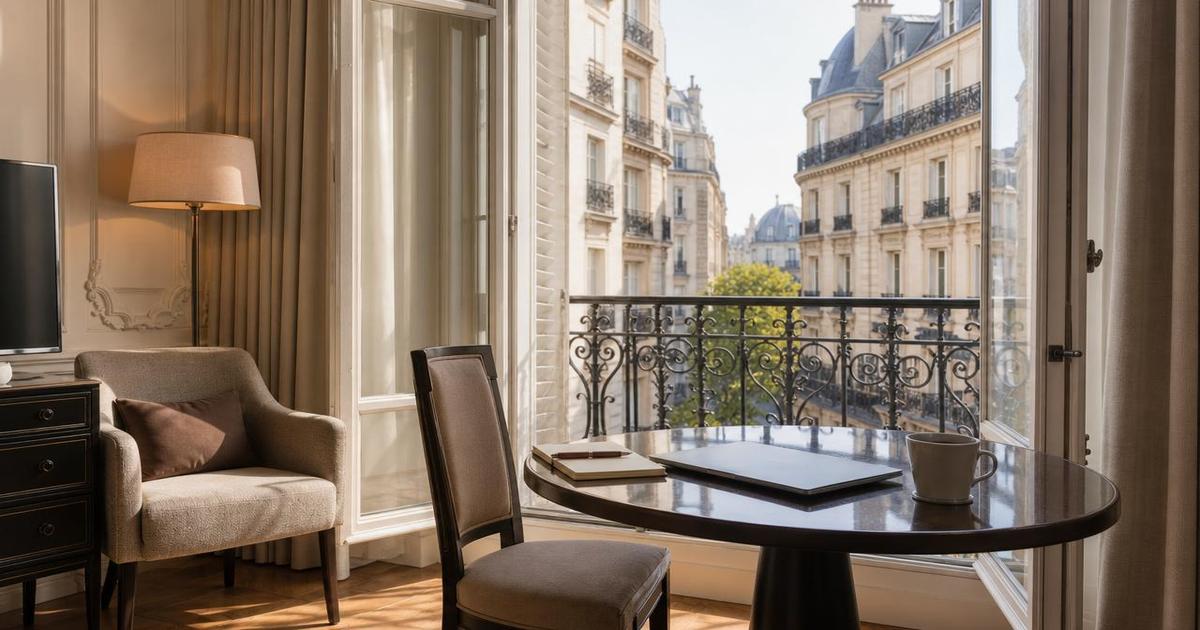
If I were spending three days in Paris, I could forgive quite a lot about my accommodation. A tiny room? Fine. No kitchen? I would probably be eating out anyway. An inconvenient commute? Annoying, but survivable for a couple of mornings.
Give me three weeks, and my priorities change completely.
I would care about where I could buy groceries without making an expedition of it. I would want a Metro or RER station close enough that an early meeting did not require military-level planning. I would want somewhere to sit that was not my bed. And, because this is Paris, I would still want to walk outside at the end of the day and immediately feel like I had not traveled all this way just to see an office.
That is the difference between choosing somewhere to sleep in Paris and choosing somewhere to live temporarily in Paris. If your trip sits closer to the latter, I would start with executive stays in Paris and work backward from where the actual work is happening.
At A Glance: Choosing a Paris Base for Business Travel
- Start with your meeting locations before deciding which Paris neighborhood looks most appealing
- Compare central neighborhoods with areas better positioned for regular trips toward major business districts such as La Défense
- Explore executive stays in Paris with longer assignments and everyday comfort in mind
- Think beyond landmarks by considering Metro access, groceries, dining, workspace, and how the neighborhood feels after office hours
- Keep one genuinely free day in reserve for a larger experience outside your normal work-trip routine
My First Rule: Map the Meetings Before the Monuments
I understand the instinct to start with the Eiffel Tower, the Seine, the Louvre and all the other places that immediately tell you, yes, you are definitely in Paris. But for a business stay, I would open the meeting calendar before opening the sightseeing map.
Paris is divided into 20 arrondissements, but your practical geography is likely to be much smaller. If most of your meetings are central, staying somewhere with easy Métro access can keep the working part of the trip straightforward. If your calendar repeatedly takes you west toward Paris La Défense, then transport connections toward the business district deserve considerably more weight. Paris's official tourism office specifically identifies La Défense as a major business destination with extensive public transport connections.
The mistake I would try to avoid is choosing accommodation because the immediate surroundings look perfect for a weekend in Paris, then discovering on Monday morning that every meeting requires an awkward cross-city commute.
For two nights, perhaps that trade-off is manageable.
For twenty? I would rather visit the postcard view than commute from it.
So, Which Part of Paris Would I Actually Choose?
This is where I would resist declaring one arrondissement the universal winner. The official Paris accommodation guide makes the same basic point in a broader way: Paris neighborhoods differ considerably in atmosphere, accessibility and suitability for different kinds of stays.
For a business traveler, I would narrow the choice according to what I needed the neighborhood to do.
If I wanted to be as central as possible
The 1st arrondissement puts you firmly in central Paris, around areas such as the Louvre and Châtelet. It is an obvious choice if meetings are scattered around the center and I want to spend evenings walking rather than planning another journey across town.
The advantage is not simply sightseeing. Centrality can make an unpredictable workday easier. If one meeting finishes early and another starts two hours later, returning to your accommodation or changing plans can be much less complicated.
If I wanted Paris outside my door after work
I would look toward areas such as Saint-Germain-des-Prés or the Marais.
Neither requires me to manufacture an evening itinerary. I could finish work, walk, eat, sit somewhere for coffee, and allow the neighborhood to be the activity. That matters more to me on an extended work trip than having five major attractions within a ten-minute radius.
The Paris tourism office's district guide is useful here because it treats the city as a collection of distinct areas rather than one giant sightseeing zone.
If most of my work were in La Défense
Then I would make that commute one of my first filters.
That does not necessarily mean I need to sleep beside the office tower. It means I would look carefully at direct transport connections before deciding how far into central Paris I wanted to stay. La Défense is served by Metro Line 1, RER A and E, tram T2 and additional rail services, so there is room to balance access to work with the kind of neighborhood experience you want outside working hours.
That balance, rather than a fashionable arrondissement name, is what I would be paying for.
What Matters More the Longer You Stay
This is where business travel becomes surprisingly domestic.
By the second or third week, I am no longer impressed that the accommodation has a beautiful lobby. I want to know where the laundry goes.
I want a refrigerator that can hold more than two bottles of water. I want somewhere sensible to open a laptop. I want to be able to eat something simple at home after three consecutive restaurant dinners. And if I am sharing the space with a colleague or partner, I definitely want enough room that neither of us has to conduct a call from the edge of the bed.
That is why furnished accommodations in Paris become more interesting as a work trip gets longer. The question stops being, “Is this a nice place to stay?” and becomes, “Could I actually maintain a normal routine here?”
What I’d Prioritize by Length of Stay
| Length of Trip | What I’d Care About Most | Accommodation Approach |
| 1–3 nights | Meeting location, quick transport, simple check-in | Hotel or serviced stay |
| 4–7 nights | Transit, neighborhood, workspace, dining nearby | Hotel or furnished accommodation |
| 1–2 weeks | Kitchen access, laundry, storage, living space | Furnished or executive stay |
| 3+ weeks | Residential comfort, routine, groceries, separate work/living areas | Furnished rental or extended-stay accommodation |
| 1+ month | Everyday livability, reliable commute, space and neighborhood fit | Executive or monthly furnished stay |
The longer the trip becomes, the less I would choose by hotel-style amenities and the more I would choose by ordinary Tuesday-night convenience.
I Would Learn the Transport System Early
Paris is not a city where I would want to improvise every commute with taxis.
The Métro, trains, RER, buses and trams give you extensive coverage, and the official Paris transport guide is a useful starting point for understanding the available ways to move around the city.
For 2026, Île-de-France Mobilités lists a standard Metro-Train-RER ticket at €2.55, valid across the region outside airport journeys. Tickets can be loaded onto a Navigo Easy pass or compatible smartphone, while travelers staying longer may want to compare the available Navigo products based on how frequently they expect to travel.
I would figure this out on day one rather than day six.
There is a noticeable difference between feeling as though every journey requires research and simply knowing which station you are walking toward.
The Paris Workweek I’d Actually Want
If the assignment lasted more than a few days, I would not try to “see Paris” every evening.
Monday might simply be dinner near the apartment.
Tuesday, perhaps a longer walk home.
Wednesday, nothing.
Thursday, maybe I cross the Seine after work and deliberately take the long way back.
Friday is when I would allow the city to keep me out later.
This is where a longer business stay has an advantage over an ordinary vacation. You do not have to extract maximum value from every hour. The Louvre can wait. So can Montmartre. So can the restaurant someone insisted you absolutely must try.
Paris is still going to be there tomorrow.
And once you stop treating every free evening like precious sightseeing inventory, you start experiencing the city at a much more comfortable pace.
Then I’d Protect One Day From Work Completely
This is the part I would actually put on the calendar.
Not “maybe Saturday if nobody emails.”
Saturday.
No laptop. No catching up over breakfast. No quick call before leaving.
If I had already spent a week or two working in central Paris, I would use that day to get properly outside my weekday radius. Based on the activities available through our current link pool, a Versailles bike tour with Palace entrance is exactly the sort of thing I would save for it.
It creates a clean break from the rhythm of meetings and central Paris without requiring another overnight stay.
If you would rather visit independently, check the Palace of Versailles practical information before leaving. The Palace is generally closed on Mondays, and RER C reaches Versailles Château–Rive Gauche station, around a ten-minute walk from the Palace.
The important part is less about Versailles itself and more about protecting a piece of the trip from becoming work.
But What If I Only Get Half a Day?
Then I would stay in Paris.
This is where I think business travelers sometimes overcomplicate things. Four free hours do not require a train ticket and an itinerary with twelve stops. Choose one district that has not appeared in your workweek and spend the afternoon there.
Walk through Saint-Germain-des-Prés. Give the Marais a few hours. Sit down for lunch instead of eating between appointments. Visit one museum rather than three.
The city becomes much more enjoyable once you stop measuring a free afternoon by the number of attractions completed.
The Paris Base Test
Before booking a longer stay, I would ask five questions.
| Question | Why It Matters |
| How long is my normal commute? | You will repeat it far more often than you visit any landmark |
| Can I reach a Metro or RER station easily? | Good connections expand both work and leisure options |
| Can I comfortably work from the accommodation? | Important when meetings move online or schedules change |
| Can I handle ordinary life nearby? | Groceries, pharmacies, cafés and laundry matter during longer stays |
| Would I still enjoy this neighborhood at 7 p.m.? | Your accommodation location becomes part of your leisure time |
That last question is the one I would not skip.
A neighborhood can be perfectly efficient at 8 a.m. and completely wrong for the kind of Paris experience you want once work is over.
ExecStays’ Take: Paris Quick Facts
Currency: Euro (EUR)
Language: French, with English commonly used in many tourism and international business settings
Time Zone: Central European Time (CET) and Central European Summer Time (CEST) seasonally
Best Time for Bleisure Travel: April to June and September to October for comfortable walking weather and easier after-work exploring
Peak Travel Season: Summer remains a major leisure period, with demand also affected by exhibitions, conferences, fashion events, and other major city events
Ideal Trip Length: 4 to 7 days for a combined work-and-leisure trip, or several weeks for longer corporate assignments
Getting Around: Métro, RER, trains, buses, trams, walking, taxis, rideshare, and cycling connect central Paris with surrounding business and leisure districts
Seasonal Highlight: Spring and early autumn are especially comfortable for adding long walks, café stops, neighborhood exploring, and outdoor time to the edges of a working day
Frequently Asked Questions About Longer Business Stays in Paris
Where should I stay in Paris for a business trip?
Start with the location of your meetings rather than a sightseeing wishlist. Central Paris can be convenient for appointments spread across the city, while travelers regularly working in La Défense should pay particular attention to direct Métro, RER and rail connections. For longer stays, groceries, workspace and neighborhood amenities become increasingly important.
Is a furnished rental worth it for a long Paris work trip?
It can be particularly useful once a trip extends beyond several nights. A kitchen, laundry facilities, storage and additional living space can make it easier to maintain an everyday routine. You can compare Paris accommodations for extended stays based on your dates and preferred location.
Is public transportation practical for business travelers in Paris?
Yes. Paris and the wider Île-de-France region are connected by Métro, RER, trains, buses and trams. For 2026, the standard Metro-Train-RER ticket costs €2.55 for eligible non-airport journeys, while other tickets and passes are available depending on travel frequency. Check current Île-de-France transport fares before your trip.
Can I visit Versailles during a Paris business trip?
Yes, particularly if you have a full free day. Versailles can be reached by public transportation from Paris, and organized experiences are also available. The Palace is generally closed on Mondays, so check current opening information before planning the visit.
How much leisure time should I add to a Paris work trip?
You do not necessarily need several additional vacation days. One protected free day plus a few unplanned evenings can be enough to experience more of Paris without turning an already busy work trip into another packed itinerary.
Choose a Paris Stay That Still Works on Week Three
A good Paris business stay should solve two problems at once. It should make the working part of the trip easier, but it should also leave you somewhere you are happy to return to when the meetings stop.
For a weekend, I might choose with my eyes.
For a month, I would choose with my calendar, my commute and my ordinary daily routine.
Explore ExecStays in Paris to compare accommodations for business trips, extended assignments and longer stays in the French capital.